




IVF for Tubal Blockage: Success Rates, Process, and Treatment Options
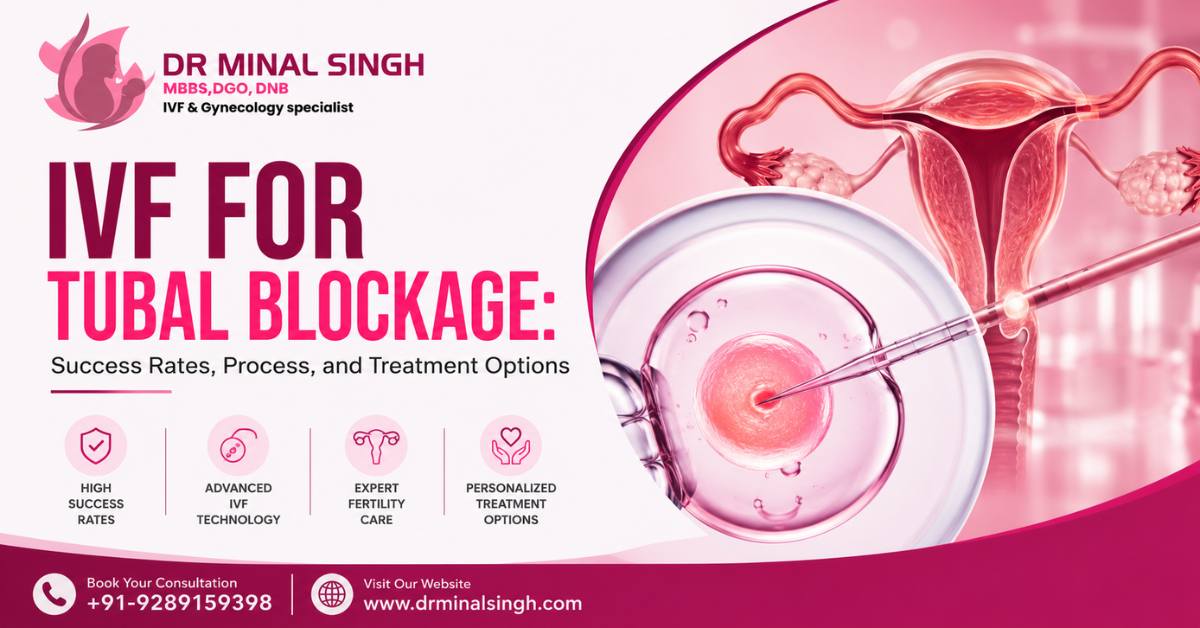


Tubal blockage is one of the leading causes of female infertility worldwide. When the fallopian tubes are blocked, the egg and sperm cannot meet naturally, making conception difficult or impossible. Fortunately, advances in reproductive medicine have made IVF for Tubal Blockage one of the most effective fertility treatments available today.
In this guide, we’ll explain the causes of tubal blockage, how IVF works, success rates, treatment options, costs, and frequently asked questions to help couples make informed decisions about their fertility journey.
The fallopian tubes are two thin tubes that connect the ovaries to the uterus. Their primary function is to transport the egg from the ovary to the uterus and provide the site where fertilization typically occurs.
A blocked fallopian tube prevents the sperm from reaching the egg or stops the fertilized egg from traveling to the uterus. Depending on the severity and location of the blockage, natural pregnancy can become challenging.
The possibility of natural pregnancy depends on whether one or both tubes are blocked.
Women may still conceive naturally if the other tube is healthy and functioning properly.
Natural conception becomes extremely difficult because the sperm cannot reach the egg. In such cases, IVF for Tubal Blockage is often recommended as the most effective treatment option.
In Vitro Fertilization (IVF) is an assisted reproductive technology (ART) that bypasses the fallopian tubes entirely.
During IVF, eggs are collected directly from the ovaries and fertilized with sperm in a laboratory. The resulting embryo is then transferred into the uterus, eliminating the need for functioning fallopian tubes.
This is why IVF for Tubal Blockage is considered the gold standard treatment for women with severe or bilateral tubal obstruction.
IVF offers several advantages for women suffering from blocked fallopian tubes:
Since fertilization occurs outside the body, blocked tubes do not interfere with conception.
Compared to tubal surgery, IVF often provides faster and more predictable pregnancy outcomes.
Women with extensive scarring, hydrosalpinx, or complete bilateral blockage can benefit significantly from IVF.
Proper embryo transfer techniques can lower the risk associated with damaged fallopian tubes.
Understanding the IVF process can help reduce anxiety and prepare couples for treatment.
Your fertility specialist will conduct:
Fertility medications are prescribed to stimulate the ovaries to produce multiple mature eggs.
Regular ultrasounds and blood tests help monitor follicle growth and hormone levels.
Once the eggs mature, they are collected using a minimally invasive procedure performed under sedation.
The eggs are fertilized with sperm in a laboratory. Depending on the case, conventional IVF or ICSI (Intracytoplasmic Sperm Injection) may be used.
The embryos are monitored for several days to identify the healthiest candidates.
One or more healthy embryos are transferred into the uterus.
Approximately 10–14 days after embryo transfer, a blood test confirms whether pregnancy has occurred.
One of the most common questions patients ask is: “What are the success rates of IVF for tubal blockage?”
Success rates depend on several factors:
Age remains the most important predictor of IVF success.
| Age Group | Average IVF Success Rate |
|---|---|
| Under 35 Years | 50%–65% |
| 35–37 Years | 40%–55% |
| 38–40 Years | 25%–40% |
| Above 40 Years | 10%–25% |
Women undergoing IVF for Tubal Blockage often experience excellent outcomes because the primary fertility issue is bypassed entirely during treatment.
Several treatment approaches may be considered depending on the severity of blockage.
Surgical correction may be suitable for mild blockages or localized damage.
For moderate to severe tubal disease, IVF is generally the preferred treatment.
Hydrosalpinx is a condition where the tube becomes filled with fluid. Research shows that untreated hydrosalpinx can reduce IVF success rates.
Doctors may recommend:
before starting IVF treatment.
You may be a suitable candidate if:
Consulting an experienced fertility specialist is essential for determining the most effective treatment plan.
If you’re looking for expert fertility guidance, consult the Best IVF Doctor in Uttam Nagar for personalized evaluation and advanced fertility solutions.
Patients can take several steps to maximize treatment outcomes:
Both obesity and being underweight can affect fertility.
These habits can negatively impact egg and sperm quality.
Take medications exactly as prescribed.
Stress management techniques such as yoga, meditation, and counseling can support overall well-being.
Focus on:
Although IVF is generally safe, potential risks include:
An experienced fertility specialist can help minimize these risks through careful monitoring and individualized treatment planning.
For women with significant tubal damage, IVF offers a direct path to pregnancy without relying on fallopian tube function.
Compared to surgical repair, IVF often provides:
As a result, most fertility experts recommend IVF for Tubal Blockage when both tubes are severely damaged or completely blocked.
Tubal blockage can be emotionally challenging for couples trying to conceive, but modern fertility treatments have dramatically improved the chances of parenthood. IVF for Tubal Blockage remains one of the most successful and widely recommended fertility solutions because it bypasses the fallopian tubes completely.
Whether your blockage is caused by infection, endometriosis, surgery, or scar tissue, consulting a qualified fertility specialist can help determine the most effective treatment strategy. Early diagnosis and timely intervention often lead to better outcomes and higher pregnancy success rates.
Yes. IVF is generally considered the most effective treatment for women with bilateral or severe tubal blockage because it bypasses the fallopian tubes completely.
Success rates typically range from 40% to 65% for women under 35, depending on age, egg quality, and overall reproductive health.
Natural conception is highly unlikely if both tubes are completely blocked. IVF is usually recommended in such cases.
Most IVF procedures involve minimal discomfort. Egg retrieval is performed under sedation, and embryo transfer is generally painless.
A complete IVF cycle usually takes about 4 to 6 weeks from ovarian stimulation to pregnancy testing.
Since IVF bypasses the fallopian tubes, tubal blockage itself typically does not reduce success rates unless associated conditions such as hydrosalpinx are present.
Common causes include pelvic infections, endometriosis, previous surgeries, sexually transmitted infections, and pelvic adhesions.
Yes. Treating hydrosalpinx before IVF can significantly improve implantation and pregnancy success rates.
 Optimized by Seraphinite Accelerator