





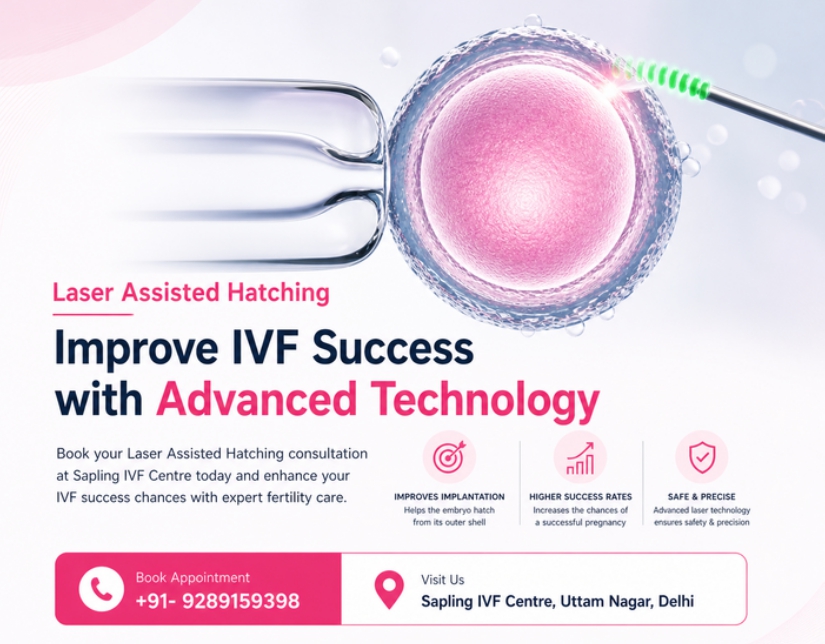
Laser Assited Hatching Treatment
Advanced Laser Assisted Hatching Treatment in Uttam Nagar
Sapling IVF Centre | Dr. Minal Singh
Advanced Laser Assisted Hatching Treatment in Uttam Nagar, designed to enhance IVF success by improving embryo implantation. Discover advanced laser-assisted hatching and Cost at Sapling IVF Centre for improved embryo implantation. Book a consultation now!


Why Choose Us?
Why Choose Laser Assisted Hatching Treatment at Sattva Fertility?


Improved IVF Success Potential
Laser Assisted Hatching may help enhance the chances of embryo implantation in selected IVF cases. At Sattva Fertility, this advanced technique is used with clinical judgment to support better pregnancy outcomes for couples facing implantation challenges.
Advanced Laser Technology
We utilize modern, high-precision laser technology designed for safe and controlled assisted hatching. This ensures minimal embryo handling and maximum accuracy, contributing to better treatment reliability and patient confidence.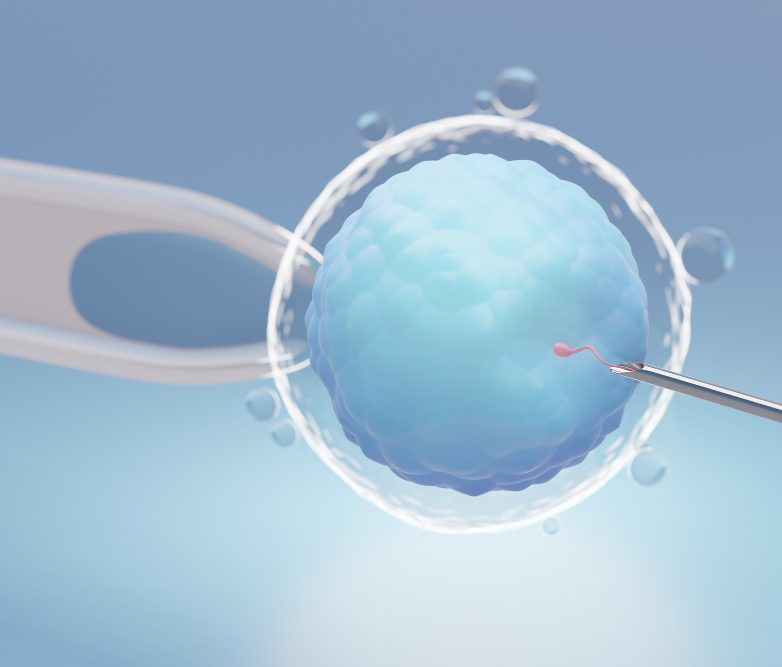
Laser Assisted Hatching Process
Laser Assisted Hatching Process Step By Step At Sapling IVF Centre, Delhi
At Sapling IVF – Dr. Minal Singh, Laser Assisted Hatching is performed using advanced precision technology to support embryo implantation and improve IVF success chances. Here is how the process is carried out step by step:

IVF Treatment & Embryo Development
The process begins as part of the IVF cycle. Eggs are fertilized with sperm in our advanced IVF laboratory, and embryos are carefully monitored as they develop for a few days under expert supervision.
Embryo Selection
Our experienced embryologists select the healthiest embryos based on their quality, growth pattern, and developmental stage. Only carefully assessed embryos are considered for Laser Assisted Hatching.
Laser Assisted Hatching Procedure
Using highly precise laser technology, a small opening is gently created in the outer shell (zona pellucida) of the embryo. This controlled thinning or opening helps the embryo hatch more easily, increasing the chances of implantation in the uterus.
Embryo Transfer
After the procedure, the selected embryo is carefully transferred into the uterus using a safe and painless embryo transfer technique performed by our fertility specialists.
Post-Transfer Care & Pregnancy Test
Patients are guided with proper post-transfer care instructions and hormonal support. After the waiting period, a pregnancy test is conducted to confirm successful implantation.
Why Choose
Why Choose Sapling IVF Centre for Laser Assisted Hatching Treatment in Uttam Nagar, Delhi?
Expert Fertility Specialist Care
At Sapling IVF, treatments are performed under the guidance of experienced fertility specialist Dr. Minal Singh, ensuring precise diagnosis, personalized care, and higher treatment accuracy for each patient.

Advanced Laser Technology
We use modern, high-precision laser systems for Assisted Hatching, which allow controlled and safe thinning of the embryo shell, improving implantation potential with minimal handling.

Improved IVF Success Support
Laser Assisted Hatching is carefully recommended in suitable IVF cases to enhance embryo implantation chances, especially in patients with previous IVF failures or implantation difficulties.

Highly Skilled Embryology Team
Our expert embryologists handle embryos with utmost care in a highly controlled IVF laboratory environment, ensuring optimal conditions for embryo development and procedure success.

State-of-the-Art IVF Laboratory
Sapling IVF Centre is equipped with advanced IVF infrastructure, including modern incubators, micromanipulation systems, and sterile lab conditions that meet global fertility standards.

Personalized & Compassionate Care
We understand the emotional journey of fertility treatment. Every patient receives individualized treatment planning, continuous support, and compassionate care throughout their IVF journey.

Laser Assisted
Laser Assisted Hatching Treatment Cost
Cost of Laser Assisted Hatching Treatment in Uttam Nagar, Delhi
The cost of Laser Assisted Hatching treatment at Sapling IVF Centre, Uttam Nagar, Delhi may vary depending on individual patient needs, IVF protocol, and clinical recommendations by the fertility specialist.
Laser Assisted Hatching is usually performed as an add-on procedure during IVF/ICSI treatment, and is advised only in selected cases where it may help improve embryo implantation chances.
The overall cost can depend on several factors such as:
- Type of IVF/ICSI cycle being performed
- Number and quality of embryos
- Laboratory and technology requirements
- Personalized treatment plan suggested by the doctor
- Call Us +918376097550
- Email shobha_shyam@yahoo.com
20+
Year
of Experience
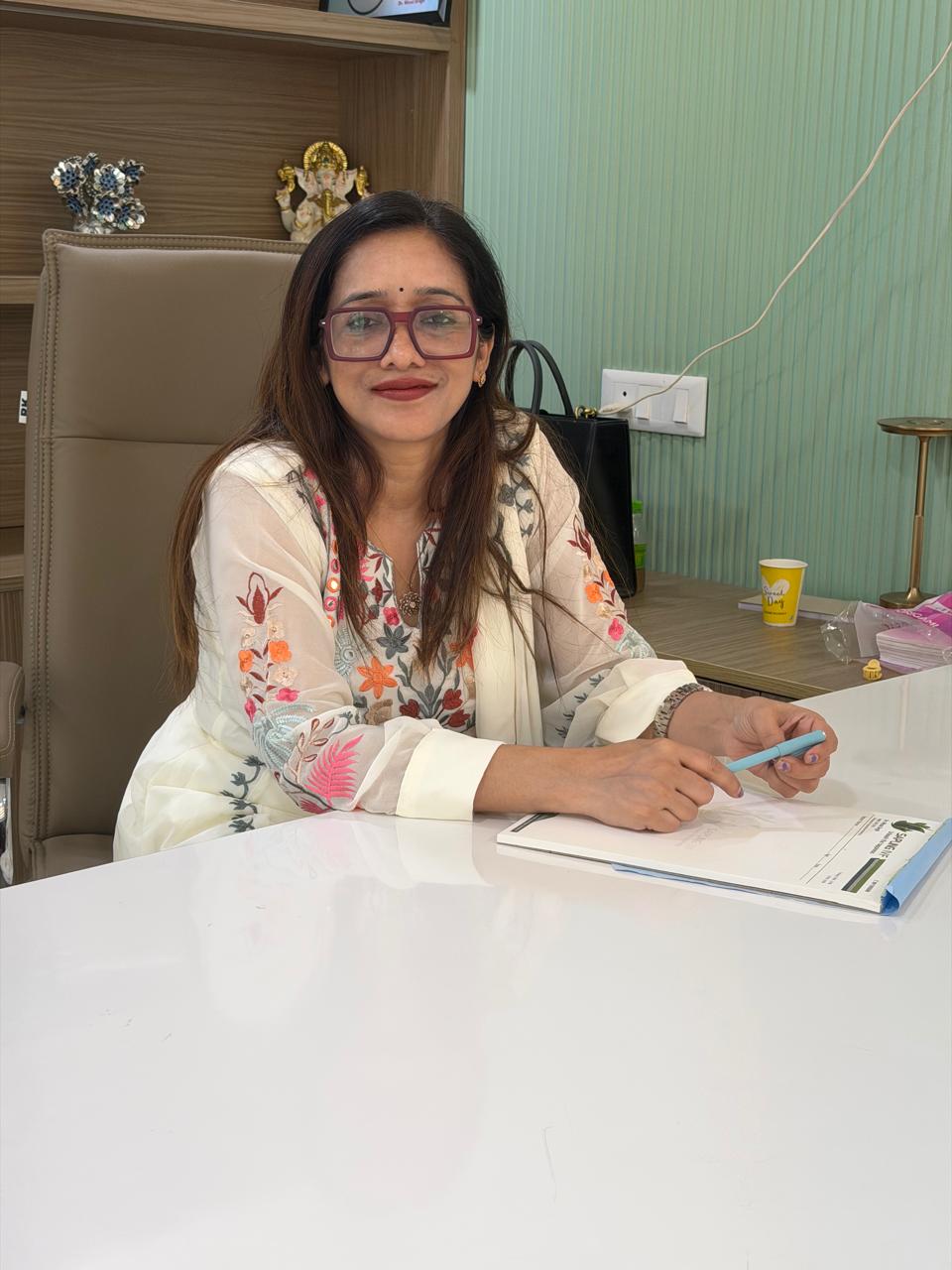
Founder, CEO & Chairperson – Sapling Hospital & Sapling IVF
Words From Our Founder
Appointment Dr. Minal Singh
Overview - Laser Assisted Hatching (LAH)
What is Laser Assisted Hatching?
In IVF treatment, a fertilized egg does not always guarantee pregnancy. For a successful pregnancy, the embryo must implant into the uterine wall after being transferred to the uterus. IVF failure can occur when the embryo is unable to hatch from its outer shell and implant properly.
Laser Assisted Hatching (LAH) is an advanced IVF technique designed to support implantation by helping the embryo hatch successfully in selected cases of IVF failure or implantation difficulty.
Why Laser Assisted Hatching is Needed
After fertilization, the embryo is cultured in the laboratory for 2 to 5 days until it develops into a healthy stage suitable for transfer. During this time, it is surrounded by a protective outer layer called the zona pellucida.
For pregnancy to occur, the embryo must naturally break through this shell (a process called hatching) and attach to the uterine lining. However, in some cases, this outer layer becomes thicker or harder, making it difficult for the embryo to hatch and implant. This can contribute to infertility or repeated IVF failure.
Laser Assisted Hatching helps by creating a precise opening in this outer layer before embryo transfer, improving the chances of implantation and pregnancy.
Laser Assisted Hatching Procedure
The procedure is performed in the IVF laboratory, usually on the 3rd day or as per embryo development stage.
- The embryo is carefully placed under a high-magnification microscope
- A highly precise laser beam is used to create a small opening in the zona pellucida
- The process takes only a few seconds
- The laser does not directly touch the embryo, ensuring maximum safety
- The treated embryo is then transferred into the uterus
This technique is highly controlled, safe, and performed only by trained embryologists in an advanced IVF lab.
Benefits of Laser Assisted Hatching
Laser Assisted Hatching offers several advantages in selected IVF cases:
- Higher precision compared to mechanical or chemical methods
- No direct manual handling of the embryo, reducing risk of damage
- Improved implantation potential in suitable cases
- May increase chances of pregnancy in repeated IVF failure cases
- Safe and widely studied with no proven risk of congenital defects
- Helps embryos with thick zona pellucida (outer shell) hatch more easily
Research shows that LAH may also improve outcomes in frozen/thawed embryo transfers, where the outer shell tends to become harder.
When is Laser Assisted Hatching Recommended?
Laser Assisted Hatching is not required for every IVF patient. It is recommended only after medical evaluation in cases such as:
- Two or more failed IVF cycles
- Advanced maternal age
- High FSH levels or poor ovarian reserve
- Poor embryo quality
- Unexplained infertility
- Frozen or thawed embryo transfer cycles
Older age or hormonal imbalance may result in a thicker zona pellucida, which can make natural hatching difficult.
Important Information
- Embryo hatching is a natural and essential process for pregnancy
- Laser Assisted Hatching is used only when natural hatching may be difficult
- It does not guarantee pregnancy but may improve success chances in selected cases
- The procedure should always be decided by a fertility specialist after evaluation
- Additional cost may apply depending on the IVF package
Cost of Laser Assisted Hatching
The approximate cost of Laser Assisted Hatching in India generally ranges between:
₹10,000 to ₹20,000 (depending on clinic, technology, and IVF plan)
Final Word
Laser Assisted Hatching offers hope to couples who have experienced repeated IVF failures or implantation challenges. When performed by experienced embryologists using advanced laser technology, it can help improve implantation rates and increase the chances of pregnancy in suitable cases.
For proper guidance and personalized advice, always consult your fertility specialist before opting for the procedure.
Contact Us
Book Your Free Fertility Consultation
Connect with Dr Minal Singh, and get a personalized treatment plan tailored to your journey to parenthood


What Our Patients Say
Patient Experiences & Reviews
Ruby Singh
Very nice hospital. I would highly recommend this hospital to everyone. Best services and cooperativ ... Read more
Sunny Grover
I had a wonderful experience at Sapling Hospital. Dr. Minal Singh is highly professional, attentive, ... Read more
Aishwarya Srivastava
It was a great experience with Dr. Minal Ma’am. She treats patients with care, listens patiently, an ... Read more
Priyanka
Our baby was admitted after a premature delivery, and we are extremely thankful for the excellent ca ... Read more
Vaibhav Porwal
Dr. Minal Singh and Dr. Rajesh are very knowledgeable and supportive. The staff is caring and profes ... Read more
Digits Connected
Sapling Hospital, led by Dr. Minal Singh, follows a highly scientific and disciplined IVF approach. ... Read more


FAQs
Frequently Asked Questions (FAQ) – Laser Assisted Hatching (LAH)
Laser Assisted Hatching is an advanced IVF technique where a precise laser is used to create a small opening in the embryo’s outer shell. This helps the embryo hatch and attach to the uterus more easily, improving implantation chances in selected cases.
No. It is not required for every IVF patient. It is only recommended in specific cases such as repeated IVF failure, poor embryo quality, advanced age, or when the embryo’s outer shell is too thick for natural hatching.
It may improve the chances of implantation in selected patients, especially those with previous IVF failures. However, success depends on multiple factors like embryo quality, age, and overall fertility health.
Yes. The procedure is considered safe when performed by trained embryologists using modern laser technology. The laser does not directly touch the embryo and is highly controlled for precision.
No scientific evidence has shown that Laser Assisted Hatching causes birth defects. Studies indicate it is a safe technique when performed correctly in an IVF laboratory.
It is usually recommended for:
- Women with repeated IVF failures
- Advanced maternal age
- Frozen or thawed embryo transfers
- Poor embryo quality
- Unexplained infertility cases
A fertility specialist will decide after proper evaluation.
The actual laser process takes only a few seconds per embryo. However, it is done carefully in a controlled IVF laboratory environment as part of the embryo preparation process.
No procedure in IVF guarantees pregnancy. Laser Assisted Hatching may improve implantation chances in suitable cases, but success depends on overall fertility conditions and embryo quality.
The cost generally ranges between ₹10,000 to ₹20,000, depending on the clinic, IVF plan, and medical requirements.
