





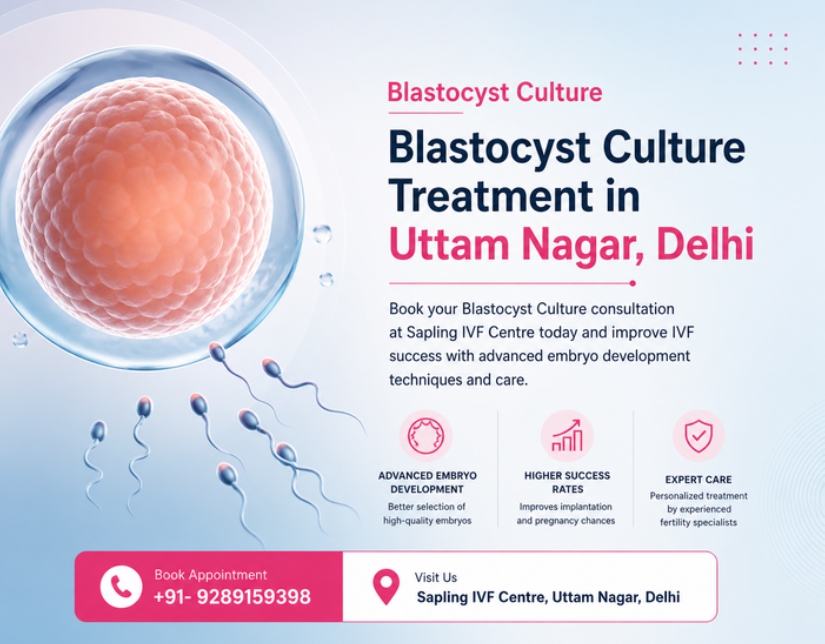
Blastocyst Culture and Transfer
Advanced Blastocyst Culture & Transfer in Uttam Nagar, Delhi
Sapling IVF Centre | Dr. Minal Singh
Advanced IVF technique where embryos are grown to Day 5–6 (blastocyst stage) for better selection and higher implantation chances. At Sapling IVF Centre, we use advanced lab technology and expert care to improve pregnancy success rates with precise embryo transfer timing.


Why Choose Us?
Why Choose Sapling IVF for Blastocyst Culture & Transfer in Delhi?


Advanced Blastocyst Culture Technology
We use modern IVF laboratory systems, high-quality culture media, and controlled incubation environments that support optimal embryo growth up to the blastocyst stage for better selection and outcomes.
Higher Embryo Selection Accuracy
By allowing embryos to develop for 5–6 days, we identify the strongest and most viable embryos, improving implantation potential and supporting better pregnancy chances in suitable cases.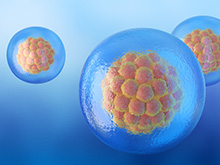
Process
Blastocyst Culture & Transfer in Delhi Process
Step-by-Step Process at Sapling IVF Centre, Uttam Nagar At Sapling IVF Centre – Dr. Minal Singh, Blastocyst Culture & Transfer is performed using advanced IVF laboratory techniques to help select the healthiest embryos and improve implantation chances.

Egg Retrieval & Fertilization
After ovarian stimulation, mature eggs are retrieved and fertilized with sperm using IVF or ICSI techniques in our advanced laboratory.
Embryo Culture Begins (Day 1–3)
The fertilized eggs are carefully placed in an incubator. Embryos are monitored as they develop from the pronuclear stage to the 6–8 cell stage, ensuring proper growth conditions.
Extended Embryo Development (Day 4–5)
Embryos continue to grow in a highly controlled environment and reach the morula stage (Day 4) and then progress toward the blastocyst stage (Day 5–6).
Blastocyst Formation & Selection
Only the strongest embryos successfully develop into blastocysts. Our embryology team carefully evaluates embryo quality to select the best ones for transfer.
Blastocyst Transfer
The selected blastocyst is gently transferred into the uterus using a thin catheter under ultrasound guidance. This is a quick, painless, and minimally invasive procedure.
Post Transfer Support
After the transfer, patients are given proper medication support and guidance. A pregnancy test is performed after the waiting period to confirm implantation success.
Why Choose
Why Choose Sapling IVF Centre for Blastocyst Culture & Transfer in Delhi?
Expert IVF & Embryology Team
Our experienced fertility specialists and embryologists carefully monitor embryo development at every stage to ensure accurate selection and better treatment outcomes.

Advanced Embryo Culture Technology
We use modern IVF laboratory systems, high-quality incubators, and specialized culture media that support optimal embryo growth up to the blastocyst stage.

Better Embryo Selection
Blastocyst culture helps identify the strongest embryos naturally, allowing us to select the most viable embryos for transfer and improve implantation potential.

Improved Pregnancy Chances
By transferring embryos at the blastocyst stage (Day 5–6), we align closely with the natural implantation window, which may improve IVF success rates in suitable cases.

Safe & Controlled IVF Laboratory
Our IVF lab follows strict quality standards with continuous monitoring to ensure embryo safety, stability, and the best possible developmental environment.

Personalized Fertility Treatment
Every patient receives a customized treatment plan based on age, medical history, and previous IVF response to choose the most effective embryo transfer strategy.
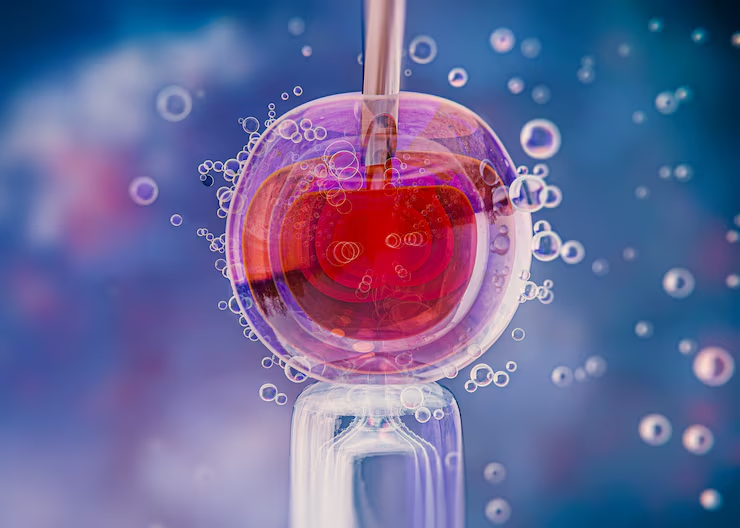
Blastocyst
Blastocyst Culture & Transfer Cost
Cost of Blastocyst Culture & Transfer in Delhi
The cost of Blastocyst Culture & Transfer in Delhi at Sapling IVF Centre, Uttam Nagar may vary depending on the patient’s fertility condition, IVF/ICSI protocol, number of embryos, and laboratory requirements.
Blastocyst culture is an advanced laboratory technique, where embryos are grown for 5–6 days until they reach the blastocyst stage before transfer. Since it involves extended embryo monitoring and specialized culture systems, it is usually considered an add-on procedure to IVF/ICSI treatment.
The overall cost may depend on factors such as:
- Type of IVF or ICSI cycle
- Embryo development and number of embryos cultured
- Laboratory technology and incubation process
- Individual patient treatment plan
- Call Us +918376097550
- Email shobha_shyam@yahoo.com

20+
Year
of Experience
Founder, CEO & Chairperson – Sapling Hospital & Sapling IVF
Words From Our Founder
Appointment Dr. Minal Singh
What is Blastocyst Culture?
Blastocyst culture is an advanced IVF laboratory technique in which embryos are grown for a longer period (up to Day 5 or Day 6) after fertilization, until they reach the blastocyst stage.
In a modern IVF lab, embryos are carefully nurtured in specialized culture media that support their natural development outside the human body.
Embryo Development Timeline in IVF
After egg retrieval and fertilization (IVF or ICSI), embryos develop step by step:
- Day 0: Egg retrieval and fertilization
- Day 1: Pronuclear stage (confirmation of fertilization)
- Day 2: 2–4 cell stage
- Day 3: 6–8 cell stage
- Day 4: Morula stage
- Day 5–6: Blastocyst stage
Only the strongest embryos continue developing to the blastocyst stage.
What is Blastocyst Transfer?
Blastocyst transfer is the process of placing a Day 5 or Day 6 embryo (blastocyst) into the uterus using a thin catheter under ultrasound guidance.
This is a simple, painless, and minimally invasive procedure that does not require anesthesia. It is performed at the exact time when the uterus is most receptive to implantation.
Why Blastocyst Transfer is Important
In earlier IVF methods, embryos were transferred on Day 2 or Day 3. However, with improved laboratory technology, embryos can now be safely grown to Day 5 or 6.
This extended culture period helps:
- Identify the strongest embryos naturally
- Improve embryo selection quality
- Increase implantation chances
- Reduce unnecessary embryo transfers
This process allows a natural selection of embryos with the highest developmental potential.
Advantages of Blastocyst Culture
- Better embryo selection based on natural development
- Higher chance of identifying healthy embryos
- Improved implantation potential
- More aligned with natural pregnancy timing
- Reduced transfer of weak embryos
- Approximately 40–50% embryos reach blastocyst stage under ideal conditions
Advantages of Blastocyst Transfer
- Higher Pregnancy Rates: Blastocysts have better implantation ability compared to early-stage embryos
- Better Embryo Selection: Only the strongest embryos reach blastocyst stage
- Reduced Multiple Pregnancy Risk: Fewer, high-quality embryos are transferred
- Higher Live Birth Rates: Studies show improved outcomes with blastocyst transfer
- More Natural Timing: Matches natural implantation window in the uterus
Who Should Consider Blastocyst Culture & Transfer?
Blastocyst culture is recommended in cases such as:
- Patients with previous IVF failure
- Couples with multiple good-quality embryos available
- Patients needing better embryo selection
- Cases of unexplained infertility
- Couples undergoing genetic testing (PGT)
- Patients wanting to reduce risk of multiple pregnancy
Who Benefits Most from Blastocyst Transfer?
- Younger patients with multiple embryos
- Couples with repeated IVF failures
- Patients with recurrent pregnancy loss
- Patients undergoing embryo genetic testing (PGT)
- Cases with limited but good-quality embryos
Important Note
Blastocyst culture is not suitable for every IVF case. In some patients, early embryo transfer may still be recommended depending on embryo quality and medical condition. Your fertility specialist will decide the best approach after evaluation.
Blastocyst Culture at Sapling IVF Centre, Delhi
At Sapling IVF, we use:
- Advanced embryo culture systems
- Highly controlled IVF laboratory conditions
- Expert embryologists with precision monitoring
Our goal is to select the best possible embryo to maximize the chances of a healthy pregnancy.
Contact Us
Book Your Free Fertility Consultation
Connect with Dr Minal Singh, and get a personalized treatment plan tailored to your journey to parenthood


What Our Patients Say
Patient Experiences & Reviews
Ruby Singh
Very nice hospital. I would highly recommend this hospital to everyone. Best services and cooperativ ... Read more
Sunny Grover
I had a wonderful experience at Sapling Hospital. Dr. Minal Singh is highly professional, attentive, ... Read more
Aishwarya Srivastava
It was a great experience with Dr. Minal Ma’am. She treats patients with care, listens patiently, an ... Read more
Priyanka
Our baby was admitted after a premature delivery, and we are extremely thankful for the excellent ca ... Read more
Vaibhav Porwal
Dr. Minal Singh and Dr. Rajesh are very knowledgeable and supportive. The staff is caring and profes ... Read more
Digits Connected
Sapling Hospital, led by Dr. Minal Singh, follows a highly scientific and disciplined IVF approach. ... Read more


FAQs
Frequently Asked Questions (FAQ) – Blastocyst Culture & Transfer
Blastocyst culture is an advanced IVF technique where embryos are grown in the laboratory for 5 to 6 days until they reach the blastocyst stage. This helps in selecting the strongest and most developed embryos for transfer.
Blastocyst transfer allows embryos to develop further in the lab, helping doctors identify healthier embryos with higher implantation potential. This often leads to better pregnancy success rates compared to early-stage embryo transfer.
Yes, in many cases it may improve success rates because only the most viable embryos survive until Day 5 or 6. However, results also depend on age, embryo quality, and overall fertility health.
Yes, it is a safe and widely used IVF procedure. It is performed under ultrasound guidance using a thin catheter and does not require anesthesia.
No. Only about 40–50% of embryos typically reach the blastocyst stage in ideal laboratory conditions. This natural selection helps identify the strongest embryos for transfer.
It is often recommended for patients with:
- Previous IVF failures
- Multiple good-quality embryos
- Need for better embryo selection
- Unexplained infertility
- Preimplantation genetic testing (PGT) cases
No, in fact it may help reduce multiple pregnancy risk. Since fewer but higher-quality embryos are transferred, doctors can often transfer a single strong embryo safely.
No, it is a simple and painless procedure. It does not require surgery or anesthesia, and most patients can resume normal activities shortly after the transfer.
