




What is Ectopic Pregnancy – Complete Guide
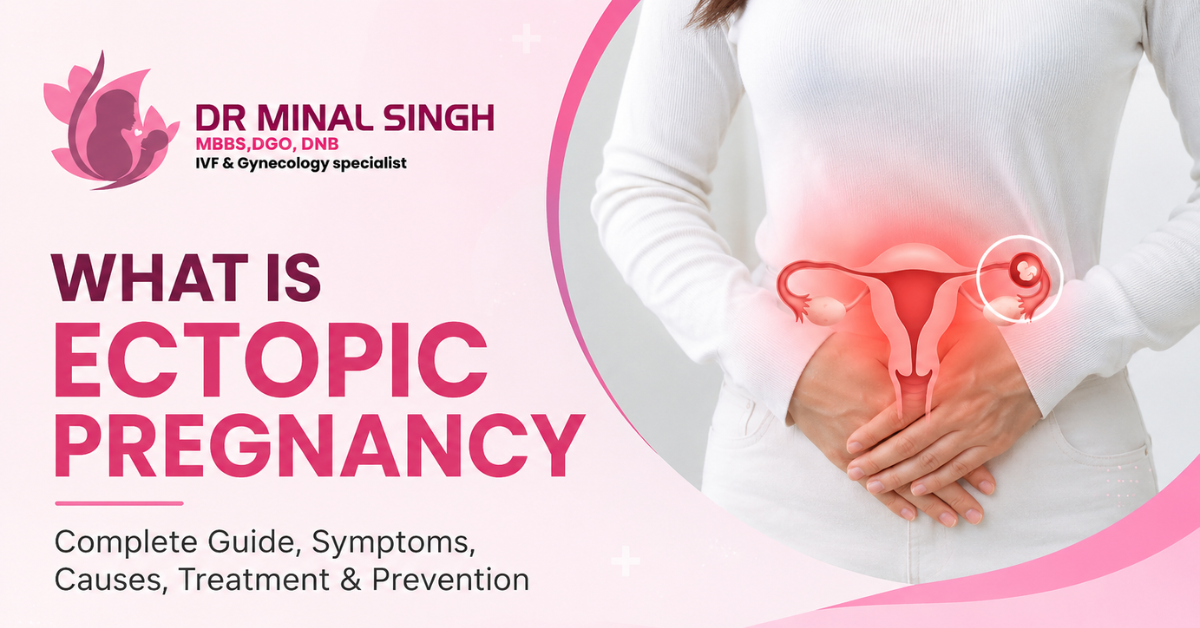


An ectopic pregnancy occurs when a fertilized egg implants and begins to grow outside the uterus — most commonly in one of the fallopian tubes. Because only the uterus has the space and lining needed to support a growing baby, an ectopic pregnancy cannot result in a live birth and can become life-threatening if not treated early.
The term “ectopic” comes from the Greek word meaning “out of place.” In rare cases, implantation may also occur in the ovary, cervix, or abdominal cavity — but fallopian tube pregnancies account for about 95% of all ectopic cases.
Quick Answer: An ectopic pregnancy is a pregnancy that grows outside the uterus, usually in the fallopian tube. It is a medical emergency that requires immediate attention.
Yes — ectopic pregnancy is a serious medical emergency.
If left untreated, the growing tissue can cause the fallopian tube to rupture, leading to severe internal bleeding that can be fatal. This is one of the leading causes of pregnancy-related deaths in the first trimester.
The good news: when detected early, ectopic pregnancy is highly treatable. This is why understanding the warning signs and acting quickly can save your life.
Ectopic pregnancy symptoms can be easy to miss in the early stages because they often feel like regular early pregnancy symptoms. However, there are specific warning signs you should never ignore.
If you experience sudden severe pain on one side of your body along with dizziness or fainting during early pregnancy — seek emergency medical care immediately.
At 4 weeks, an ectopic pregnancy may feel almost identical to a normal early pregnancy. However, there are subtle signs to look for:
| Sign | What It Feels Like |
|---|---|
| One-sided pelvic pain | A dull ache or sharp cramp on the left or right side |
| Light spotting or bleeding | Different from your usual period — may be brown or pink |
| Positive pregnancy test | Yes, ectopic pregnancies often test positive |
| Nausea and fatigue | Similar to a normal pregnancy |
| No visible sac on ultrasound | A key diagnostic clue for doctors |
At 4 weeks, the fallopian tube has not yet ruptured in most cases, which means early detection at this stage offers the best outcomes. If you have a positive pregnancy test and one-sided pelvic pain, contact your doctor right away.
Most women begin to notice ectopic pregnancy pain between 4 and 12 weeks of pregnancy — most commonly around 6 to 8 weeks.
The pain typically begins as a dull ache or discomfort on one side of the lower abdomen. As the embryo grows, the pain can become sharper and more severe. If the tube ruptures (usually around 6–10 weeks), the pain becomes sudden and excruciating.
Timeline of Ectopic Pregnancy Pain:
An ectopic pregnancy occurs when the fertilized egg is unable to travel down the fallopian tube into the uterus. The most common underlying cause is damage or blockage of the fallopian tube.
1. Previous Fallopian Tube Damage Scarring from surgery, infection, or endometriosis can narrow the tube, trapping the fertilized egg.
2. Pelvic Inflammatory Disease (PID) Infections such as chlamydia or gonorrhea can cause inflammation and scarring in the reproductive tract — significantly increasing ectopic pregnancy risk.
3. Previous Ectopic Pregnancy If you have had one ectopic pregnancy, your risk of having another is higher.
4. Endometriosis Tissue growing outside the uterus can block or damage the fallopian tubes.
5. Fertility Treatments (IVF) Women undergoing IVF or other assisted reproductive technologies have a slightly higher risk.
6. Use of IUD (Intrauterine Device) While IUDs are highly effective at preventing pregnancy, if pregnancy does occur, it is more likely to be ectopic.
7. Smoking Smoking affects ciliary function in the fallopian tubes, slowing the egg’s journey to the uterus.
8. Age Women over 35 years of age are at higher risk.
Yes — an ectopic pregnancy will typically show a positive result on a home pregnancy test.
This is because ectopic pregnancies still produce the hormone hCG (human chorionic gonadotropin), which is what pregnancy tests detect. However, the hCG levels in ectopic pregnancies often rise more slowly than in normal pregnancies.
If your test is positive but your hCG levels are lower than expected, or if the levels are not doubling as expected every 48 hours, your doctor may suspect an ectopic pregnancy.
Important: A positive pregnancy test does not confirm the pregnancy is in the uterus. Always follow up with a transvaginal ultrasound to confirm the location of the pregnancy.
There are three main treatment options for ectopic pregnancy, depending on how early it is detected and whether the tube has ruptured.
If detected early and the tube has not ruptured, doctors may use methotrexate, a drug that stops the growth of the pregnancy cells and allows the body to reabsorb them. This is a non-surgical option best suited for:
Regular blood tests are needed afterward to confirm hCG levels are declining.
If the ectopic pregnancy is more advanced or if methotrexate isn’t suitable, keyhole surgery (laparoscopy) is performed to:
Surgery is also the primary treatment if the tube has already ruptured.
In the case of a ruptured ectopic pregnancy with severe internal bleeding, open emergency surgery is required to stop the bleeding and remove the pregnancy tissue.
While not all ectopic pregnancies can be prevented, there are steps you can take to reduce your risk:
If you have a history of pelvic infections or previous ectopic pregnancy, consult a trusted specialist early. A Best Gynecologist in Uttam Nagar can help assess your risk and guide you through a safer pregnancy journey.
You should contact a doctor immediately if you:
Early diagnosis through blood tests and transvaginal ultrasound is the key to safe and effective treatment.
If you are planning a pregnancy after fertility treatments or have underlying reproductive health conditions, working with an experienced IVF Doctor in Uttam Nagar Delhi can help you navigate the process safely and with expert support.
1: Can you survive an ectopic pregnancy?
Yes. With early diagnosis and proper treatment, an ectopic pregnancy is highly survivable. The key is acting quickly.
2: Can an ectopic pregnancy be moved to the uterus?
No. Unfortunately, there is currently no medical procedure that can transfer an ectopic pregnancy into the uterus.
3: Will I be able to get pregnant again after an ectopic pregnancy?
Many women successfully conceive after an ectopic pregnancy. However, future pregnancy should be carefully monitored from the start. Speak to your gynecologist about your specific case.
4: How is ectopic pregnancy diagnosed?
Through a combination of blood tests (hCG levels), transvaginal ultrasound, and sometimes laparoscopy.
5: Does ectopic pregnancy cause periods?
No — but it can cause irregular bleeding that may be mistaken for a period. This is one reason why many women don’t realise something is wrong.
This article is intended for informational purposes only and does not replace professional medical advice. Always consult a qualified gynecologist or healthcare provider for diagnosis and treatment.
 Optimized by Seraphinite Accelerator